
When life hands you a catheter,
are UTIs on your mind?

Inside the UTI bubble
If you use a catheter there’s a good chance that you are vulnerable to urinary tract infections (UTIs). UTIs can be difficult to talk about to loved ones as well as your healthcare provider. Not only can UTIs be painful and disruptive, but their impact can also be difficult to explain. Sometimes it can feel like you are in a bubble.
UTI risk factors
Understanding the factors that can raise your risk of contracting a urinary tract infection is essential. It can help you take measures to avoid UTIs. And help you explain your concerns clearly to your nurse or doctor. Because talking about UTIs and feeling understood could be your first step to leaving your UTI bubble behind.


“For me, it’s very important that when I catheterise I just slowly remove the catheter so that I am sure that everything is out of my bladder.”
Jelske | NL
The importance of emptying your bladder
completely every time you catheterise
If the bladder is not emptied completely, it can raise your risk of getting a UTI.

When catheterising, you may experience urine flow stops. This can happen even though your bladder is not completely empty.

If urine is left in the bladder after catheterisation, bacteria in the urine and bladder may quickly multiply and could eventually cause a UTI.

Repositioning your catheter until the bladder is completely empty is important to help reduce your risk of UTIs.
Less friction, less risk of UTIs*
When there is less friction, there’s less risk of harming your urethra*, and so less worry about UTIs*.
The catheter coating plays a key role in the protection of the urethra from complications and UTIs.
Unfortunately, not all hydrophilic coatings are the same.
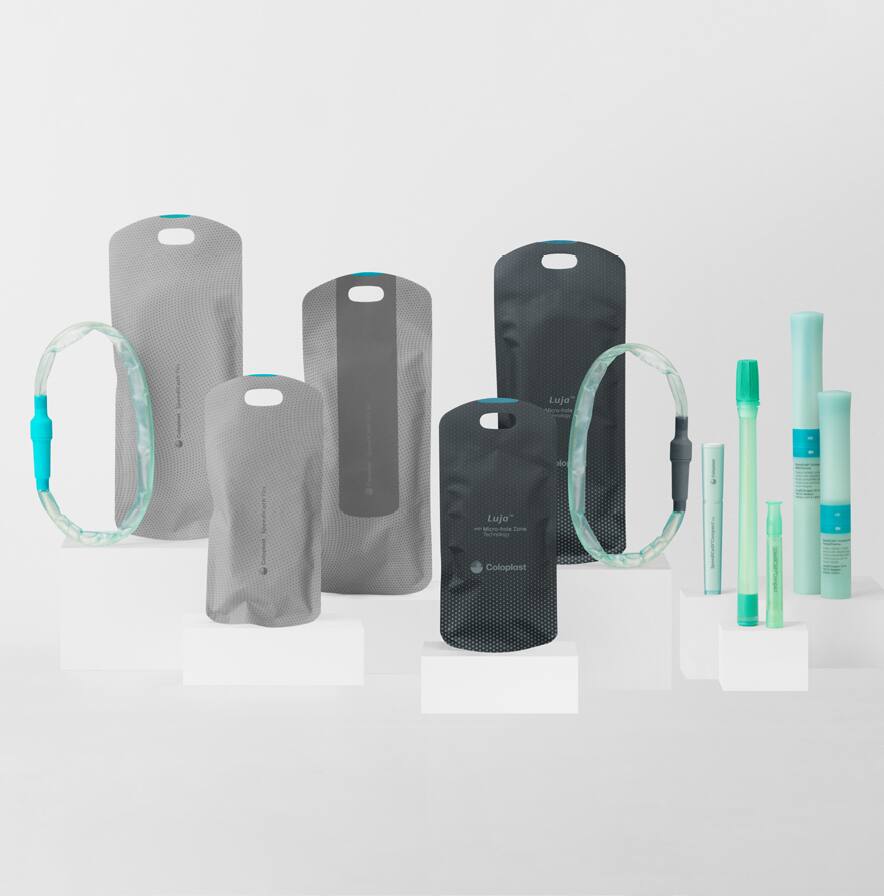
All SpeediCath® and Luja™ catheters come with the unique Triple Action Coating Technology™, which reduces the risk of UTI’s*1 and ensures SpeediCath® catheters are smooth and stay smooth during insertion and withdrawal.
For a reduced risk of UTI*, look for less friction and discover our range of catheters today.
*Compared to uncoated catheters
1. Rognoni C, Tarricone R. Intermittent catheterisation with hydrophilic and non-hydrophilic urinary catheters: systematic literature review and meta-analyses. BMC Urol. 2017 Jan 10;17(1):4. doi: 10.1186/s12894-016-0191-1. PMID: 28073354; PMCID: PMC5225586.